

A smooth wall surface is the dream of any DIY’er and professional painter. But to get that look of perfection of a paint job, it is usually dependent on your quality of drywall finishing. It is a sensitive process that can have minor errors that will be very clear when the paint is fully dry. Most of these mistakes commonly occur due to impatience or incorrect technique, and in the end, they can spoil a great project. Good Samaritan Services LLC has prepared this guide for you so that you can avoid the common drywall mistakes and achieve a beautiful, smooth wall.
Flawless Walls: Avoid These Drywall Finishing Mistakes Before Painting
In order to get a perfect paint job, it is absolutely important to be aware of major drywall finishing mistakes. These mistakes, which are mostly connected to preparation, application, and patience, can lead to an uneven and rough surface of the wall in Hopkins, MN.
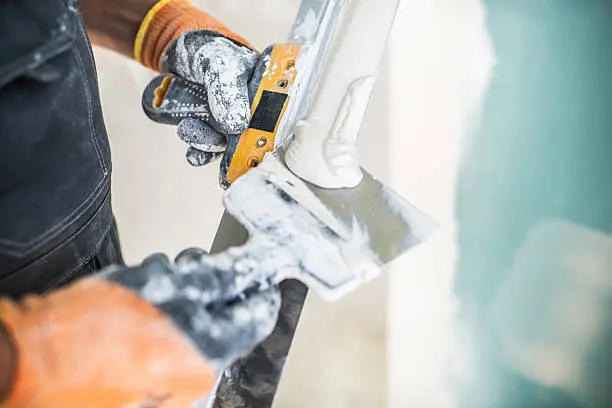
The following is a list of the 10 most common mistakes made with drywall finishing that one should try not to commit:
- Using Too Much Joint Compound (Mud)
The first mistake that people make in Drywall Finishing is to apply a thick coat of joint compound to save time. Guess what? It won’t save you any time; instead, it will delay the process. Applying too much mud at a single time takes eternity to dry, and it will keep cracking or shrinking.
The Solution: Always apply multiple thin layers. Let each layer of the joint dry before adding another one.
- Rushing the Drying Process
You need a huge amount of patience while Drywall Finishing. When mud or primer is applied onto wet compounds, moisture is trapped. This leaves the line with bubbles, cracks, or peeling paint.
The Solution: let it dry for 12-24 hours. Drying is also affected by humidity, so it takes more time during rainy days.
- Poor or Uneven Sanding.
The smooth appearance in Drywall Finishing is achieved through sanding. Not sanding enough will result in an uneven and bumpy surface. But on the other hand, over-sanding is also harmful, because it may tear the drywall paper or show the joint tape, which will look bad under paint.
The Solution: Use fine-grit sandpaper (150-220 grit) for a smooth and even surface. Sand lightly and evenly.
- Failure to Embed the Tape Properly
In Drywall Finishing, joint tape is very important for having strong seams. When you don’t press the tape firmly into the first layer of mud, air pockets will form. This makes the tape bubble, lift, or peel off after some time.
The Solution: In order to fix it, a drywall knife should be used to push the tape into the wet mud so that it is perfectly flat and clear.
- Skipping Primer Before Painting
In Drywall Finishing, the joint compound and drywall paper absorb paint differently. The mud is much more porous. If you skip the primer, the paint will absorb irregularly, resulting in a blotchy finish.
The Solution: It is always important to apply a quality primer-sealer on top of all the finished areas before applying your top coat.
- Poor Feathering of Edges
In Drywall Finishing, feathering means blending the edges of the mud into the wall so that it hides the joint. Under light and paint, harsh lines or noticeable ridges around patches or seams will be extremely visible.
The Solution: Use wider drywall knives for each coat it will blend the edges into the existing wall surface.
- Improper Fastener Coverage
Screws and nails should be covered. When they are exposed or there is too much mud on them, it will show through the paint.
The Fix: Take care not to break the paper by making sure that all screw or nail heads form a tiny dimple. And apply thin layers of mud on them.
- Failure to prepare the Surface.
Dust, dirt, or debris on the wall before mudding or priming will ruin the finish. They will not let the compound or primer properly stick to the surface.
The Solution: Maintain cleanliness in your working area. Use a damp cloth to wipe off the dusty parts of the sanded areas.
Conclusion
In conclusion, you will be able to save a lot of time and frustration by not making these mistakes. The prep work is the key to a professional-looking paint job. This will make you patient and apply the right techniques and be attentive to detail in the drywall finishing stage, which will give you a smooth, seamless finish and something that you will be proud of to paint. So, if you mess up, don’t worry just scrape it off, allow it to dry, and correct it with the next layer.
FAQs
How many coats of mud do I need for a seam?
You can use 3 thin three-layer coats for a strong, invisible seam.
How much time does mud take to dry?
Allow each coat to dry for 12 to 24 hours, depending on the humidity.
How do I fix a bubble in the tape after drying?
Poke out the bubble, re-tape the point with new tape, and put two more very thin coats on it.
Why does visible tape or seams show through after drywall finishing?
Visible tape often results from not embedding the tape properly in the compound, applying uneven thicknesses, or failing to feather the edges sufficiently
Does improper sanding affect the final paint finish on drywall?
Yes, uneven sanding, over‑sanding, or leaving ridges and bumps will show through on the painted surface and degrade the finish quality.